
Giuseppe Taffarel
- Bekannt als
- Regie
- Geboren
- 1. März 1922
- Gestorben
- 9. April 2012 · 90 Jahre alt
- Geburtsort
- Vittorio Veneto, Veneto, Italy
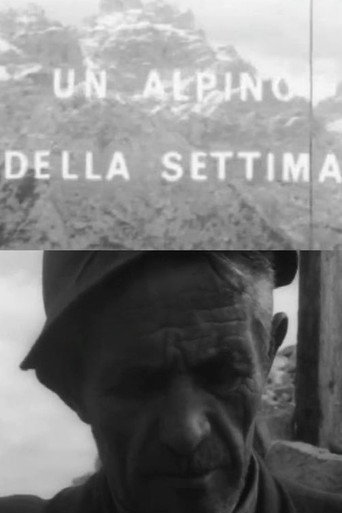
Giuseppe Taffarel was born in Vittorio Veneto (TV) on March 1, 1922, where he died on April 9, 2012, shortly after celebrating his ninetieth birthday. From an early age he showed an innate passion for theater. He was self-taught and read plays with predilection. At the age of 19 he arrived in Rome where he attended the Academy of Dramatic Arts directed by Silvio D'Amico. In 1943 he enlisted in the partisan resistance fought in the Belluno-Treviso Prealps. He distinguished himself for his courage in numerous war actions. In 1946 he returned to Rome, in the golden age of neorealism, frequenting the world of cinema that he found at the Menghi Brothers' trattoria and at the Rosati bar. In the capital, while participating in the writing of numerous screenplays, he began a career as a film actor that saw him act in about twenty films including Achtung! Banditi! by Carlo Lizzani (1951) with Gina Lollobrigida and Giuliano Montaldo. At the end of the 1940s he collaborated with Glauco Pellegrini and Rodolfo Sonego on the making of some documentaries (the most famous are Parliamo del naso, Lezioni di anatomia and L’esperienza del cubismo) and was assistant director on Ceramiche Umbre by Glauco Pellegrini (1949), the first experimental color documentary by Ferraniacolor produced by Lux Film. In 1960 – after having theorized on the birth of the “new documentary cinema” with Michelangelo Antonioni and his friend Vittorio De Seta – he directed his first film La croce shot in Vittorio Veneto and its surroundings. From then until the beginning of the 1980s, he made over three hundred documentaries on different themes and genres: from paleontology to contemporary history, from natural sciences to Italian customs up to the representation of cities and landscapes where the history of art and anthropology are always highlighted. In all of Taffarel’s works, the anthropological/ethnographic gaze flows into the aesthetics of the image, culminating in moments of absolute lyricism and rare audiovisual poetics. The Venetian author’s ability to observe life, grasping the threads that connect the small history of the common man to the great history of humanity, is recognizable in about twenty short films in neorealist style. These documentaries can be considered small pearls in the history of cinema, like the recently restored and digitalized Fazzoletti di terra (1962), L’alpino della Settima (1969) and Via Crucis (1972).
Bekannt aus




Schauspiel3
- 1954 Film
- 1951 Film
-
1950
Il sentiero dell'odio BastianoFilm
Hinter der Kamera27
-
1972
Via Crucis DirectorFilm
-
1970
La maratona delle nevi DirectorFilm
-
1969
Legna da ardere DirectorFilm
-
1969
Voci DirectorFilm
-
1969
Un alpino della settima DirectorFilm
-
1968
Laguna DirectorFilm
-
1968
La resistenza nel Trevigiano DirectorFilm
-
1968
Vittorio Veneto: Città nella storia DirectorFilm
-
1967
Uccellagione tradizione antica DirectorFilm
-
1967
Il contadino che viene dal mare DirectorFilm
-
1967
Il confino di Cesare Pavese DirectorFilm
-
1967
Caccia col capanno DirectorFilm
-
1967
Paese mio covo de' corcali DirectorFilm
-
1966
Un giorno alla settimana DirectorFilm
-
1966
Monte Grappa 1944 DirectorFilm
-
1966
Surf Casting DirectorFilm
-
1966
Solitudine DirectorFilm
-
1966
La montagna del sole DirectorFilm
-
1964
Impressioni libanesi DirectorFilm
-
1964
Riviera Mediterraneo est DirectorFilm
-
1963
Fazzoletti di terra DirectorFilm
-
1962
Le nerte DirectorFilm
-
1961
Siebenfache Rache ScreenplayFilm
-
1960
La croce DirectorFilm
-
1960
Uccellanda DirectorFilm
-
1960
Sesto Grado Superiore DirectorFilm
-
1959
Herkules, der Schrecken der Hunnen ScreenplayFilm