
Renato Castellani
- Bekannt als
- Regie
- Geboren
- 4. September 1913
- Gestorben
- 28. Dezember 1985 · 72 Jahre alt
- Geburtsort
- Finale Ligure, Liguria, Italy
Renato Castellani (4 September 1913 – 28 December 1985) was an Italian film director and screenwriter. Son of a representative of Kodak, he was born in Varigotti, at the time a hamlet of Final Pia, which became Finale Ligure (Savona) in 1927, where his mother had returned from Argentina to give birth to his son. He spent his childhood in Argentina, in the city of Rosario. After 12 years, he returned to Liguria and resumed his studies in Genoa. He moved to Milan, where he graduated from the Polytechnic University in architecture. In Milan he met Livio Castiglioni and together they aired for GUF (Fascist University Group) L'ora radiofonica and La fontana malata by Aldo Palazzeschi, experimenting with new techniques for sound editing on radio. He began collaborating in 1936 as a military consultant for The Great Appeal, a film by Mario Camerini. He worked as a film critic and worked - as a screenwriter or assistant director - with important names of the Italian cinema of the time, such as Augusto Genina, with whom he signed the script for Castles in the air (1939), by Mario Soldati, of which he was assistant director on the set of Malombra (1942). He then worked with the director Alessandro Blasetti, signing the screenplays of his movies An Adventure of Salvator Rosa (1939), The Iron Crown (1941), Four Steps in the Clouds (1942) and with the director Camillo Mastrocinque, signing the screenplay of The Cuckoo Clock (1938). His first work as a director was A Pistol Shot (1942), based on a story by Aleksandr Puskin, in which Alberto Moravia also took part in the screenplay, with Fosco Giachetti and Assia Noris. This movie, as well as the subsequent Zazà (1942), fit into the caligraphism genre. With Under the Sun of Rome (1948), It's Forever Springtime (1950), both shot outdoors with non-professional actors, and especially Two Cents Worth of Hope (1952), Castellani gave rise to a new genre, defined as "pink neorealism", considered by critics at the time as the downward trend of neorealism, but destined to a vast audience success. With Two Cents Worth of Hope, he won the ex aequo Grand Prix at the 1952 Cannes Film Festival. With Romeo and Juliet (1954), he won the Golden Lion at the 1954 Venice Film Festival. After some other significant films such as Dreams in a Drawer (1957) and The Brigand (1961), Castellani devoted himself mainly to biopics in episodes shot for television, widely followed, such as The Life of Leonardo da Vinci (1971) and The Life of Verdi (1982).
Bekannt aus




Schauspiel2
-
1971
Siamo tutti in libertà provvisoria Reporter (uncredited)Film
-
1967
Cinéma et Réalité SelfFilm
Hinter der Kamera39
-
1987
Der Schatz im All Writer, Creator · 5 FolgenSerie
-
1982
Giuseppe Verdi Director, Writer, Creator · 9 FolgenSerie
- 1982 Film
-
1978
Il furto della gioconda Director, Writer, Creator · 3 FolgenSerie
-
1971
Das Leben des Leonardo da Vinci Director, Writer, Creator · 5 FolgenSerie
-
1970
Alta comedia Writer · 1 FolgenSerie
-
1969
Una breve stagione Director, WriterFilm
-
1969
Erzengel ScreenplayFilm
-
1967
Die Über-Sinnliche Director, ScreenplayFilm
-
1964
Hochzeit auf italienisch ScreenplayFilm
-
1964
Controsesso DirectorFilm
-
1964
Drei Liebesnächte Director, Story, ScreenplayFilm
-
1963
Verrückte Seefahrt Director, Story, ScreenplayFilm
-
1961
Der Brigant Director, ScreenplayFilm
-
1959
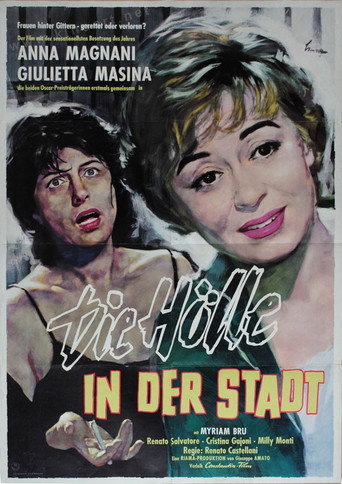
Die Hölle in der Stadt DirectorFilm
-
1958
Auferstehung WriterFilm
-
1957
Träume in der Schublade Director, Writer, Production DesignFilm
-
1954
Romeo & Julia Director, AdaptationFilm
-
1952
Zwei Groschen Hoffnung Director, Screenplay, StoryFilm
-
1950
Es ist Frühling Director, WriterFilm
-
1948
Unter der Sonne von Rom Story, Screenplay, DirectorFilm
-
1946
Mio figlio professore Director, Story, ScreenplayFilm
-
1946
Notte di tempesta AdaptationFilm
-
1946
Malìa ScreenplayFilm
-
1945
Quartieri alti ScreenplayFilm
-
1944
La donna della montagna Director, ScreenplayFilm
-
1944
Zazà Director, ScreenplayFilm
-
1942
Malombra ScreenplayFilm
-
1942
Ein Pistolenschuß Director, ScreenplayFilm
-
1942
La cena delle beffe ScreenplayFilm
-
1941
La corona di ferro ScreenplayFilm
-
1940
Walzer einer Nacht ScreenplayFilm
-
1940
Centomila dollari First Assistant DirectorFilm
-
1939
Un'avventura di Salvator Rosa ScreenplayFilm
-
1939
Due milioni per un sorriso WriterFilm
-
1939
Alarm im Warenhaus Screenplay, First Assistant DirectorFilm
-
1938
L'orologio a cucù ScreenplayFilm
-
1938
L'Inconnue de Monte-Carlo WriterFilm
-
1936
Il grande appello Assistant DirectorFilm